The KODAK Slide N Scan Max is designed to make home film archiving more straightforward, with a moving film tray, direct SD card saving, and simple image adjustments.
In this kodak slide n scan max review, the key question is whether its supported formats and hands-on workflow suit the collection you want to preserve.
Slide N Scan Max Review Summary
The quick verdict
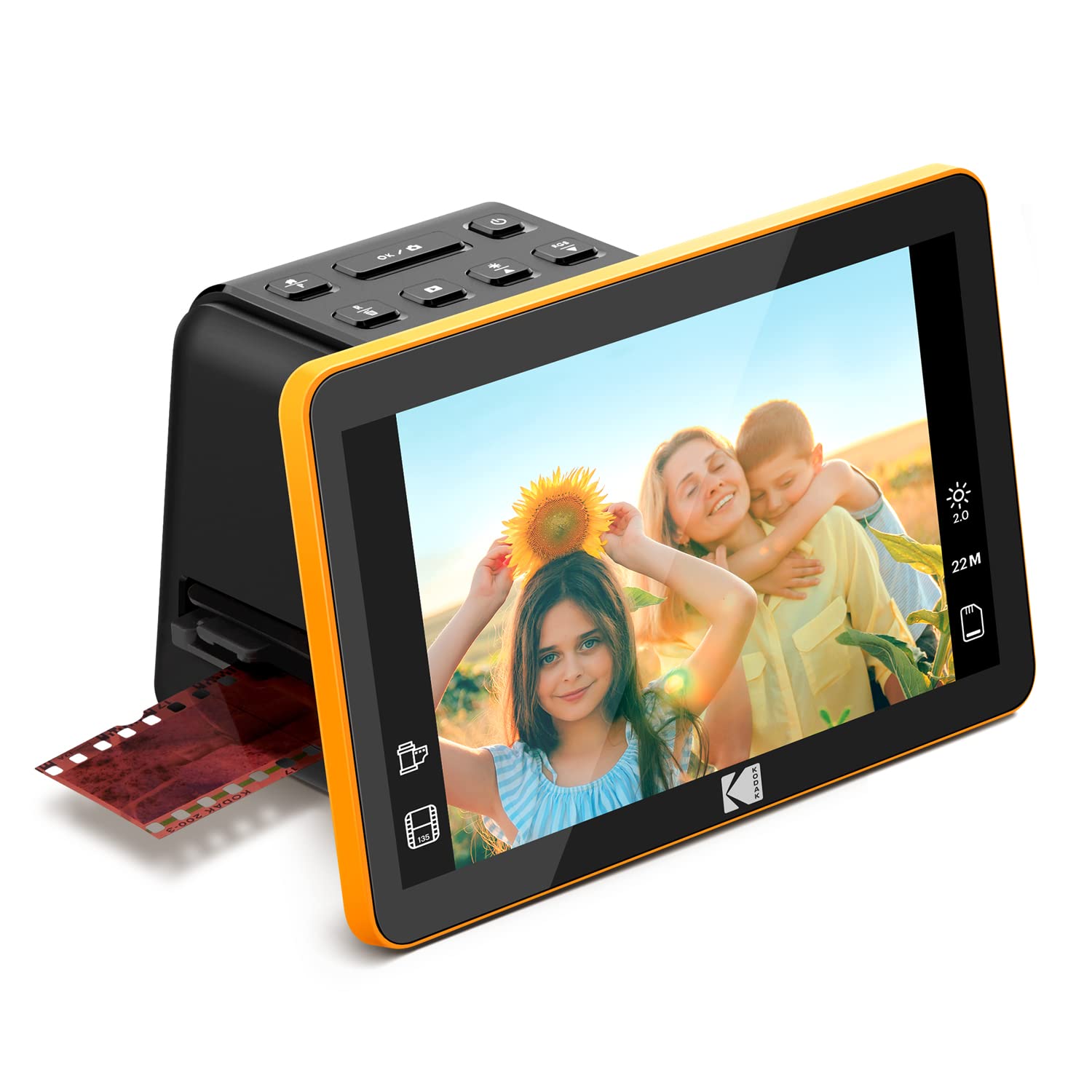
1,000+ ratings
Read Amazon ReviewsKODAK Slide N Scan Max
A good fit for home archivists who want to digitize common slide and negative formats without relying on a computer during scanning.
- Film support for 135, 110, and 126 formats, with slides and color or black-and-white negatives.
- A smooth-moving tray designed to feed film without constant repositioning.
- Direct saving to SD or SDHC cards up to 32GB, supporting a computer-free scanning workflow.
- A 13MP CMOS sensor with stated image output up to 4208 × 3120 pixels, including 22MP interpolation.

Pros
- Supports several common home-archive film formats and both slides and negatives.
- Direct card saving can simplify scanning when you want to work without a computer beside the scanner.
Consider before buying
- The supported formats are specified as 135, 110, and 126, so owners of other film formats should verify their needs before buying.
- The listed maximum card capacity is 32GB; consider how often you want to transfer or replace cards when planning larger batches.
Read the full review summary
This scanner combines support for 135, 110, and 126 film with slides and color or black-and-white negatives.
Its tray feeds film through the scanner, while direct saving to an SD or SDHC card up to 32GB means a computer does not have to be part of the scanning workflow.
The 13MP CMOS sensor captures images at up to 4208 × 3120 pixels with interpolation, and the supplied description identifies one-touch resizing, conversion, and image adjustment.
It may suit someone organizing a personal collection in manageable batches; buyers with unusual formats or a preference for computer-centered scanning should confirm compatibility and workflow details before choosing.
The buying factors
Slide N Scan Max Scorecard
Editorial scores reflect listed features and buyer fit; they are not laboratory measurements or customer ratings.
Format coverage
Handles 135, 110, and 126 film, including slides and color or black-and-white negatives.
Standalone workflow
Direct SD or SDHC saving up to 32GB avoids requiring a computer during scanning.
Image output
The 13MP CMOS sensor and up-to-4208 × 3120 output provide a clear digital target, with interpolation contributing to the stated maximum.
Ease of operation
A moving tray and one-touch editing are intended to reduce repeated repositioning and complex menu work.
Editing flexibility
Basic resizing, conversion, and adjustment are described, but the supplied details do not establish a deeper editing workflow.
Setup compatibility
USB connectivity and a Windows 7 minimum system requirement are listed; check compatibility with your own setup if you plan to connect a computer.
Key Features and Specifications of Slide N Scan Max
- Film support for 135, 110, and 126 formats, with slides and color or black-and-white negatives.
- A smooth-moving tray designed to feed film without constant repositioning.
- Direct saving to SD or SDHC cards up to 32GB, supporting a computer-free scanning workflow.
- A 13MP CMOS sensor with stated image output up to 4208 × 3120 pixels, including 22MP interpolation.
- One-touch capture software for resizing, converting, and adjusting images.
- USB connection, LED light source, and a one-year limited warranty.
Pros and Cons of Slide N Scan Max
Pros
- Supports several common home-archive film formats and both slides and negatives.
- Direct card saving can simplify scanning when you want to work without a computer beside the scanner.
- The moving tray is intended to make feeding film less dependent on repeated repositioning.
- One-touch image adjustments keep the described workflow focused on basic digitization tasks.
Consider before buying
- The supported formats are specified as 135, 110, and 126, so owners of other film formats should verify their needs before buying.
- The listed maximum card capacity is 32GB; consider how often you want to transfer or replace cards when planning larger batches.
- The output description includes interpolation, so buyers comparing image-resolution figures should distinguish the stated maximum from the sensor's 13MP resolution.
Who Should Buy Slide N Scan Max?
Good fit
Consider the Slide N Scan Max if your archive is mainly made up of 135, 110, or 126 slides and negatives and you want to save scans directly to a memory card.
The format coverage and direct-save workflow make it a practical option for sorting through family photographs in batches.
It is also worth considering if you prefer a guided, simple process over a complex editing interface. The described one-touch tools cover resizing, conversion, and adjustments, while the moving tray is designed to keep film feeding manageable.
Before ordering, match your collection to the listed film formats and decide whether the 32GB card limit fits your typical scanning sessions.
If computer connection matters to you, check how the USB workflow and Windows 7 minimum requirement fit your current setup.
Who should skip it
Skip it if your archive depends on film formats beyond 135, 110, and 126 unless you confirm that your material can be handled. The described format range is the clearest guide to whether this scanner fits your collection.
Look elsewhere if you require a specific advanced editing workflow or a particular computer compatibility that is not established by the product details. Confirm those needs before choosing a scanner.
How the Slide N Scan Max Fits a Home Film Archive
Format coverage and preparation
The scanner is aimed at familiar consumer film formats: 135, 110, and 126. That range covers slides and color or black-and-white negatives, so it can be useful for a mixed personal archive.
Before committing, identify the formats in your collection and make sure the ones you most want to digitize fall within this support.
A tray-led scanning routine
The moving tray is intended to feed film without constant repositioning.
That design may make a session feel more continuous when you are working through a run of related images, though you should still expect to handle and organize the originals as you scan.
Saving and image output
Direct SD or SDHC saving, with support up to 32GB, lets the scanner operate without a computer in the immediate workflow.
The 13MP CMOS sensor and stated output up to 4208 × 3120 give buyers a resolution reference, while the 22MP interpolation figure is a separate part of the output description rather than the sensor's native megapixel count.
Editing expectations
One-touch software is described for resizing, converting, and adjusting images, which suits straightforward digitization.
Buyers who expect more involved image correction should confirm that the available controls match their preferred process before relying on this as their main archive tool.
Alternatives to Slide N Scan Max
Slide & Negative Scanners alternative
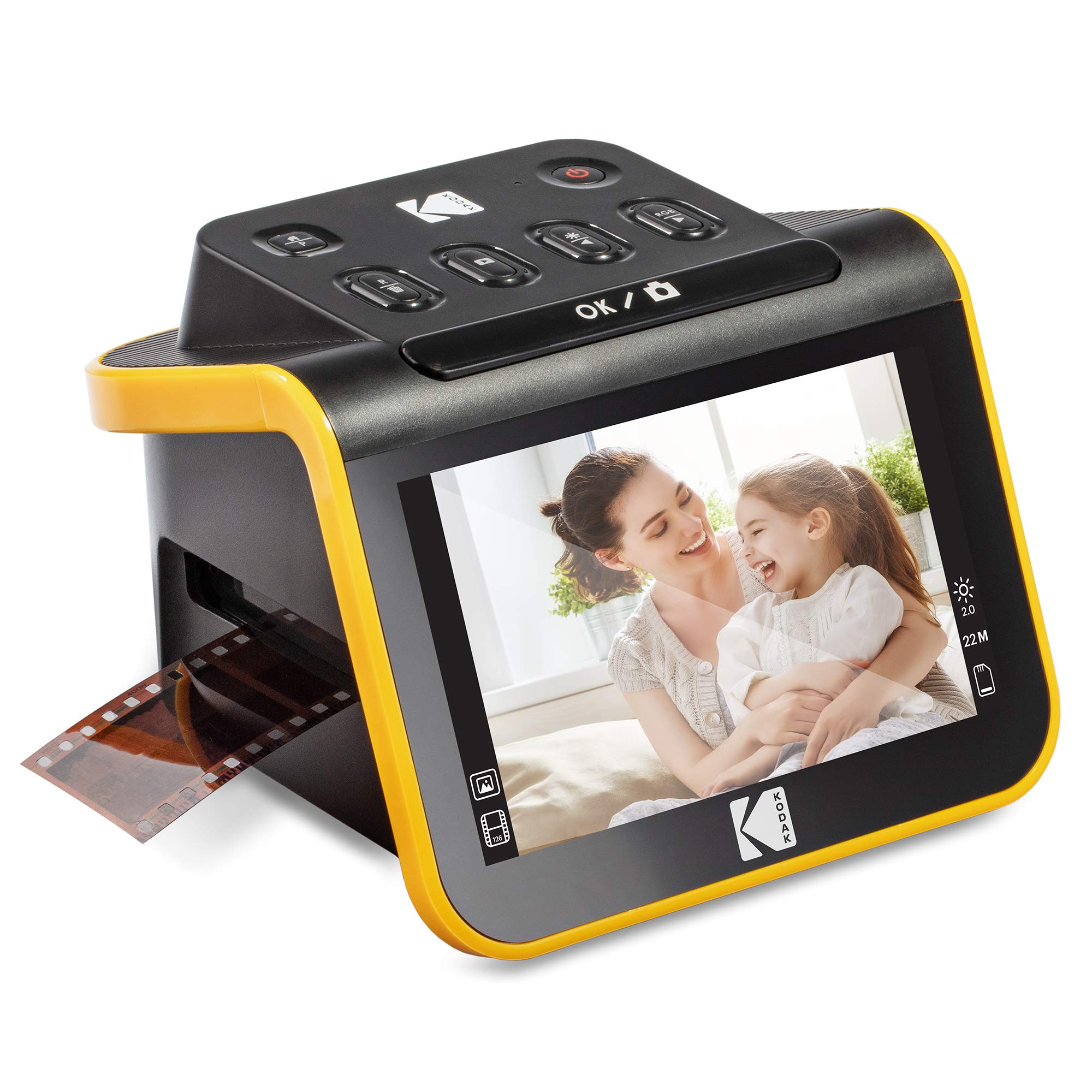
12,000+ ratings
Read Amazon ReviewsKODAK Slide N Scan Film & Slide Scanner
Choose the Max if its moving-tray design and stated output fit your needs. Consider this model if an integrated 5-inch preview screen and the listed adjustment controls matter more to your scanning routine.
- This KODAK scanner supports 135, 110, and 126 film and slides, includes a 5-inch LCD with gallery mode, and saves to SD or SDHC cards up to 32GB.
- Its description also mentions film inserts and adapters, USB and HDMI cables, and controls for film type, color, brightness, and date or time.
- The Slide N Scan Max supports 135, 110, and 126 formats and saves directly to SD or SDHC cards up to 32GB.
Slide & Negative Scanners alternative
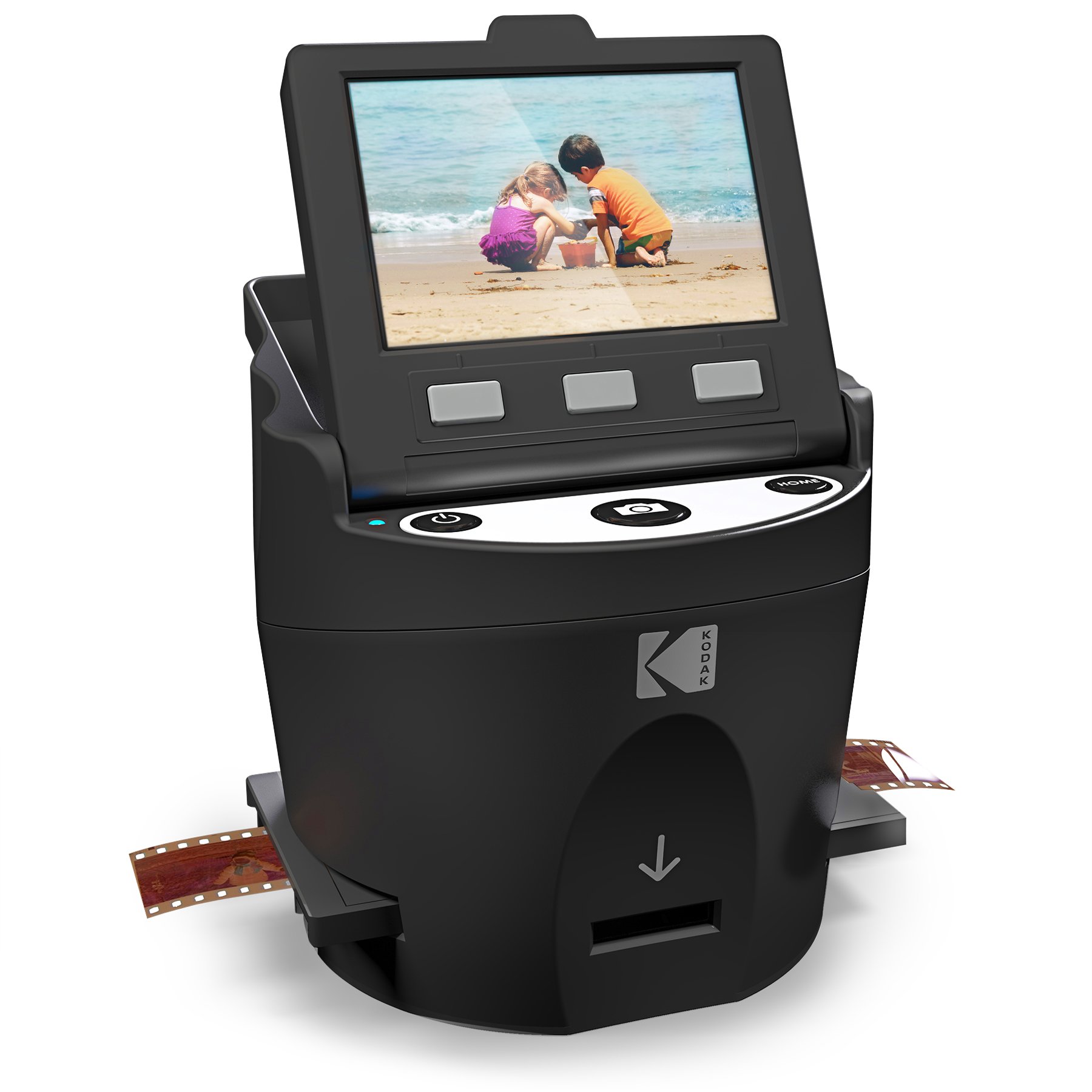
11,000+ ratings
Read Amazon ReviewsKODAK SCANZA Film & Slide Scanner
The Max is a fit for buyers whose collection centers on its three listed formats and who value direct saving to a card.
Consider the SCANZA if your archive includes Super 8 or 8mm, or if its larger stated card capacity and adjustable display better suit your plans.
- The SCANZA supports 35mm, 126, 110, Super 8, and 8mm negatives and slides, and saves to SD cards up to 128GB.
- It has a 3.5-inch adjustable-brightness LCD with tilt, one-touch buttons, multiple inserts and adapters, and tools to adjust RGB and resolution.
- The Slide N Scan Max supports 135, 110, and 126 film and saves scans directly to SD or SDHC cards up to 32GB.
Is Slide N Scan Max Worth It?
The KODAK Slide N Scan Max is worth considering for a home archive built around 135, 110, and 126 film. Its moving tray, direct SD saving, and one-touch adjustments make the described workflow approachable for straightforward digitization.
Choose it after checking that your formats, card capacity needs, and computer setup align with its design.
Its stated resolution includes interpolation, and the described editing tools focus on basic adjustments, so buyers with more specialized scanning or editing requirements should compare those needs carefully.
Your review at a glance
1,000+ ratings
Read Amazon ReviewsKODAK Slide N Scan Max
A good fit for home archivists who want to digitize common slide and negative formats without relying on a computer during scanning.
- Film support for 135, 110, and 126 formats, with slides and color or black-and-white negatives.
- A smooth-moving tray designed to feed film without constant repositioning.
- Direct saving to SD or SDHC cards up to 32GB, supporting a computer-free scanning workflow.
- A 13MP CMOS sensor with stated image output up to 4208 × 3120 pixels, including 22MP interpolation.