The Kodak Slide N Scan is designed to turn selected slides and film negatives into JPEG files with an on-device preview and simple editing controls.
This kodak slide n scan film & slide scanner review looks at its format support, display, and direct-to-card workflow to help you decide whether it suits your archive.
Slide N Scan Review Summary
The quick verdict
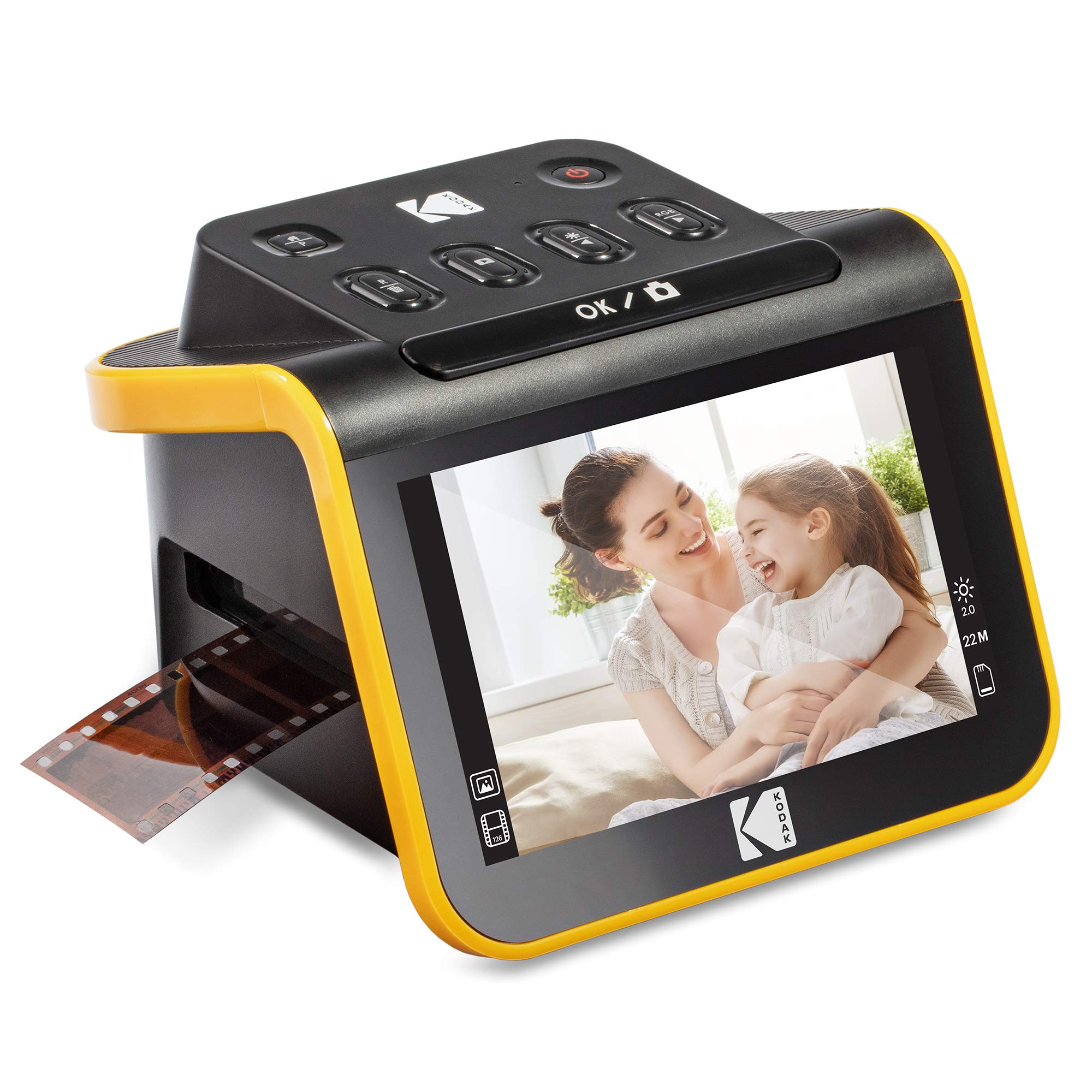
12,000+ ratings
Read Amazon ReviewsKodak Slide N Scan
A fit for families who want to preview, edit, and save common slide and negative formats without making a computer the center of the workflow.
- Converts 135, 110, and 126 color or black-and-white negatives and slides into JPEG digital files.
- 5-inch LCD with wide viewing angle and gallery mode for previewing, editing, and showing images.
- Quick-feeding tray supports continuous loading, with a 50mm slide holder and adapters for the listed film formats.
- One-touch capture software offers image enhancement, resizing, and conversion, plus film type, color, brightness, date, and time options.

Pros
- A comparatively large built-in screen makes it easier to review images at the scanner.
- Supports three common film formats across slides and color or black-and-white negatives.
Consider before buying
- The SD or SDHC card needed for direct saving is not included, so plan to supply one.
- The described film support is limited to 135, 110, and 126 formats; check your collection before buying if it includes other types.
Read the full review summary
This scanner brings several useful steps together: load supported film through a quick-feeding tray, preview images on a 5-inch LCD, make basic adjustments, and save the result to an SD or SDHC card.
A computer connection is also available through a Type-C USB-enabled computer, while the included HDMI cable offers another way to connect for viewing.
It is most appealing for people digitizing a personal collection of 135, 110, or 126 negatives and slides, especially if they value a large built-in screen and straightforward controls.
Its workflow favors accessible home archiving over fine-grained image editing: the description highlights one-touch capture and simple color, brightness, date, and time options.
The buying factors
Slide N Scan Scorecard
Editorial scores reflect listed features and buyer fit; they are not laboratory measurements or customer ratings.
Supported film formats
Handles 135, 110, and 126 negatives and slides, covering several common family-photo formats.
On-device preview
A 5-inch LCD with a wide viewing angle and gallery mode makes browsing and sharing scans convenient.
Workflow simplicity
Quick-feeding inserts and a single scan button are aimed at keeping routine transfers simple.
Basic editing controls
Film type, color, brightness, size, and date or time options support practical adjustments without complex menus.
Standalone saving
Direct saving to an SD or SDHC card lets buyers work without centering the process on a computer; the card is not included.
Archive flexibility
USB and HDMI cables are included, and card support extends up to 32GB, though the workflow and storage needs should be checked against the size of the collection.
Key Features and Specifications of Slide N Scan
- Converts 135, 110, and 126 color or black-and-white negatives and slides into JPEG digital files.
- 5-inch LCD with wide viewing angle and gallery mode for previewing, editing, and showing images.
- Quick-feeding tray supports continuous loading, with a 50mm slide holder and adapters for the listed film formats.
- One-touch capture software offers image enhancement, resizing, and conversion, plus film type, color, brightness, date, and time options.
- Saves directly to SD or SDHC cards up to 32GB; the card is sold separately.
- Includes USB and HDMI cables and a cleaning brush; connects to Type-C USB-enabled computers.
Pros and Cons of Slide N Scan
Pros
- A comparatively large built-in screen makes it easier to review images at the scanner.
- Supports three common film formats across slides and color or black-and-white negatives.
- Direct card saving allows a simple scanning routine without requiring a computer for every step.
- Supplied holders, adapters, cables, and cleaning brush help cover the basic setup.
Consider before buying
- The SD or SDHC card needed for direct saving is not included, so plan to supply one.
- The described film support is limited to 135, 110, and 126 formats; check your collection before buying if it includes other types.
- Its editing options are presented as simple adjustments, so buyers who need extensive image controls should confirm that this approach is enough for their workflow.
Who Should Buy Slide N Scan?
Good fit
Consider the Slide N Scan if you have a collection of 135, 110, or 126 family negatives and slides and want to handle previewing, basic corrections, and saving in one compact process.
The 5-inch screen and gallery mode can make it useful when you want to sort through images at the scanner or share a preview with someone nearby.
It also makes sense for a home archive where direct-to-card JPEG saving is appealing. Add an SD or SDHC card up to the supported capacity, then use the included adapters and holder for the corresponding media.
The quick-feeding tray is intended to reduce interruptions as you move through a batch.
Before ordering, identify the formats in your boxes and estimate how much storage your scans may require.
If you expect to revise many images in detail, decide whether the listed one-touch editing and basic color and brightness controls will meet your needs.
Who should skip it
Skip it if the film you need to digitize is outside the listed 135, 110, and 126 formats; verify compatibility for any less common or specialized media before choosing a scanner.
Look elsewhere if your workflow depends on extensive image correction or a storage setup beyond the supported SD and SDHC cards up to 32GB. Confirm the options you need before committing to a large archive project.
How the Kodak Slide N Scan Fits a Home Film Archive
Format support for mixed family collections
Support for 135, 110, and 126 film makes this model relevant to collections accumulated across different cameras and eras.
Both slides and color or black-and-white negatives are included in the described use, so buyers can check their boxes and group compatible media before starting.
A screen-centered scanning routine
The 5-inch LCD and gallery mode give the scanner a more self-contained feel than a workflow that depends on a computer display for every preview.
That can help when selecting images or showing a scan to family, while the screen also provides a place to make the stated simple edits.
Saving and organizing the output
Direct saving to an SD or SDHC card supports a straightforward capture process, with a maximum card capacity of 32GB.
Since the card is not included, choose one before beginning and consider how you will transfer and organize JPEG files after scanning.
What the editing approach suggests
The software is described around one-touch capture, resizing, conversion, and basic image adjustments rather than a deep editing workflow.
That design should suit buyers who want accessible digital copies; anyone planning substantial restoration can decide whether to pair scans with a separate editing process.
Alternatives to Slide N Scan
Slide & Negative Scanners alternative
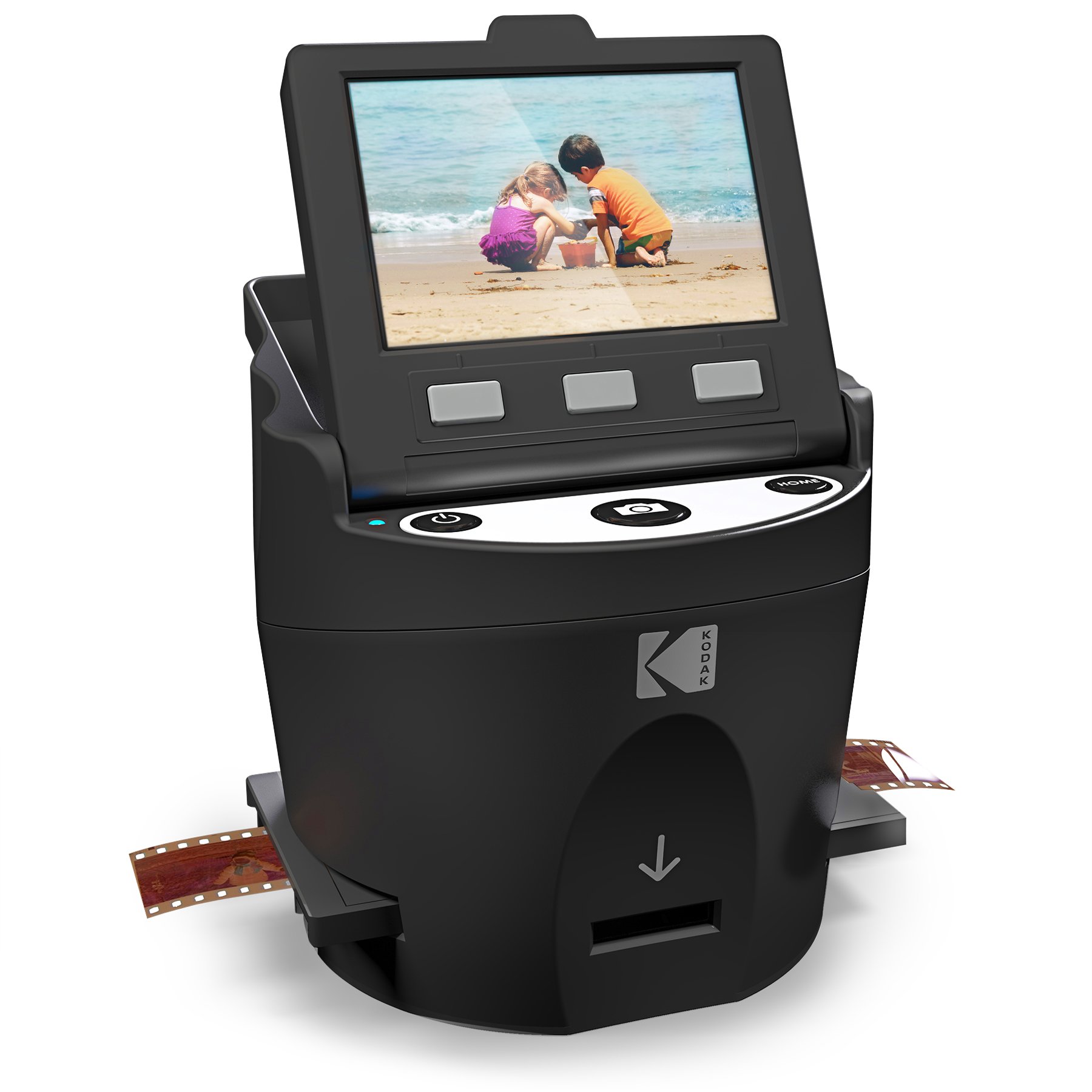
11,000+ ratings
Read Amazon ReviewsKodak SCANZA Digital Film & Slide Scanner
Choose the Slide N Scan if a larger preview screen is the priority and your collection uses its listed formats.
The SCANZA may suit buyers whose archives include Super 8 or 8mm, or who want the stated higher card capacity; check that its smaller display fits your browsing preference.
- The SCANZA has a 3.5-inch adjustable, tilting display and lists support for 35mm, 126, 110, Super 8, and 8mm film.
- Its description also specifies SD card support up to 128GB and includes an AC adapter and video cable.
- The Slide N Scan combines a 5-inch LCD, direct SD or SDHC saving up to 32GB, and support for 135, 110, and 126 film.
Slide & Negative Scanners alternative
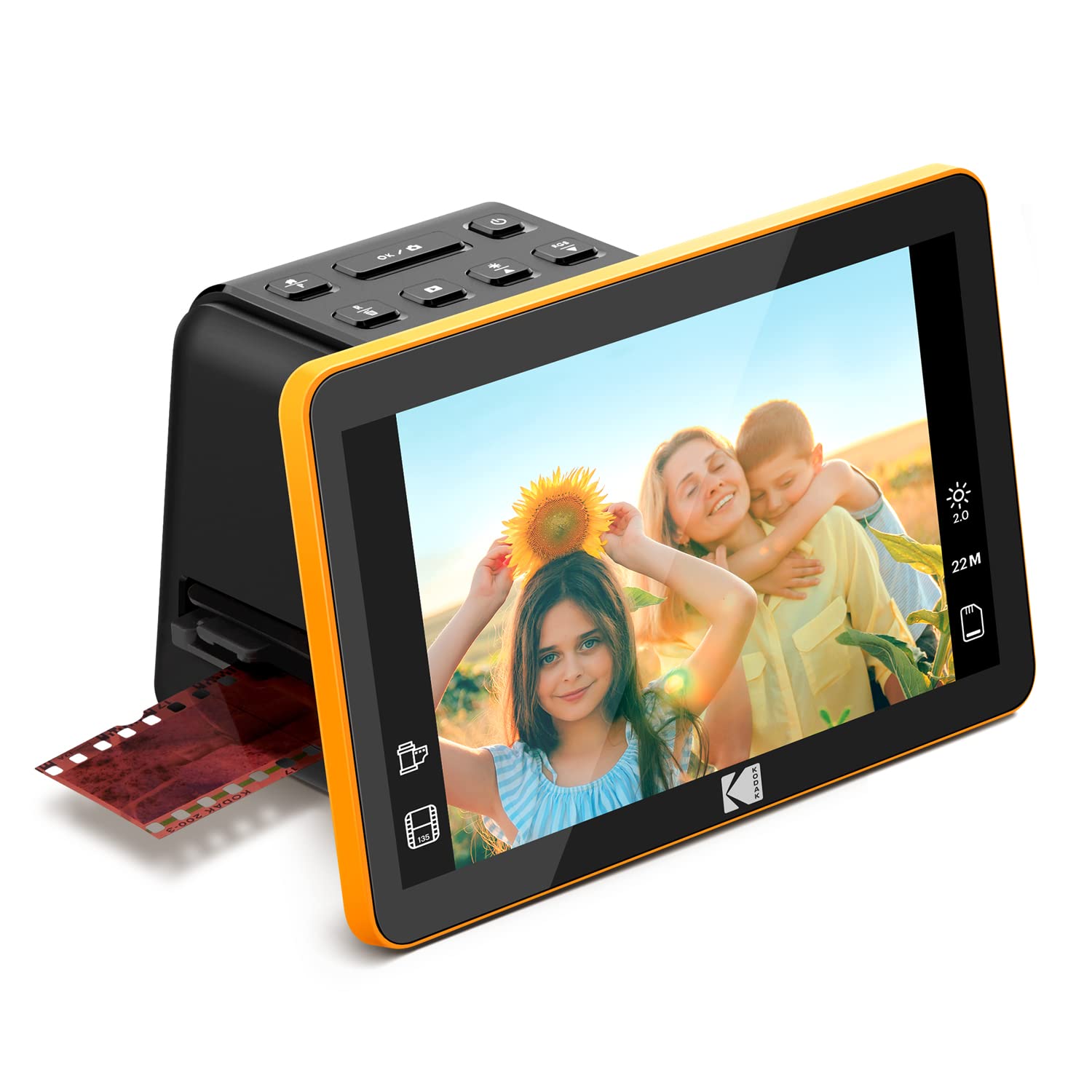
1,000+ ratings
Read Amazon ReviewsKodak Slide N Scan Max Film Scanner
The two models target a similar home digitizing routine with the same listed formats and card capacity.
Consider the Max if its specified sensor and output details are useful in comparing models; favor the Slide N Scan when the 5-inch display and gallery mode are the features you want to prioritize.
- The Slide N Scan Max also supports 135, 110, and 126 film and direct saving to SD or SDHC cards up to 32GB.
- Its description specifies a 13MP CMOS sensor with 22MP interpolation and gives a 4208 × 3120 maximum output resolution.
- The Slide N Scan described here supports 135, 110, and 126 film and uses a 5-inch LCD with gallery mode for previewing and basic edits.
Is Slide N Scan Worth It?
The Kodak Slide N Scan is worth considering for a home collection of 135, 110, or 126 slides and negatives, especially if you want a built-in screen, basic editing, and direct card saving.
Its large LCD and straightforward workflow are the clearest reasons to shortlist it.
Check your film formats and storage plan first, since the SD card is separate and support is specified for selected formats and cards up to 32GB.
For buyers whose collection fits those boundaries and who want accessible JPEG copies, it is a practical option to compare.
Your review at a glance
12,000+ ratings
Read Amazon ReviewsKodak Slide N Scan
A fit for families who want to preview, edit, and save common slide and negative formats without making a computer the center of the workflow.
- Converts 135, 110, and 126 color or black-and-white negatives and slides into JPEG digital files.
- 5-inch LCD with wide viewing angle and gallery mode for previewing, editing, and showing images.
- Quick-feeding tray supports continuous loading, with a 50mm slide holder and adapters for the listed film formats.
- One-touch capture software offers image enhancement, resizing, and conversion, plus film type, color, brightness, date, and time options.